

Choosing where to buy property in Istanbul is often more important than choosing the apartment itself. Istanbul is not one single real estate market: a modern residence in Kağıthane, a Bosphorus-oriented home in Üsküdar, a family property in Beylikdüzü, and a premium residence in Sarıyer can serve very different goals.
What is the best area to buy property in Istanbul?
There is no single best district for every buyer. The right area depends on whether your priority is investment, rental demand, family living, central access, Bosphorus lifestyle, Turkish citizenship eligibility, or long-term personal use. If rental income is one of your main goals, use our Istanbul Rental Yields 2026 guide to compare gross and net returns before choosing a district.
A practical decision combines location, transport, property quality, real demand, budget and exit strategy.
Best Istanbul Areas by Buyer Goal
Areas worth comparing when transport, modern projects and access to employment corridors matter.
Established locations where address, lifestyle, scarcity and Bosphorus proximity can carry more weight.
Buyers who prioritize larger homes, residential projects and day-to-day family needs may start here.
Featured Areas to Compare in Istanbul
Central accessibility, modern residential stock and proximity to major business districts.
Explore Kağıthane →A project-led corridor shaped by residential development, commercial activity and major road connections.
Explore Basin Express →Established residential character with cross-city transport connections and premium Bosphorus pockets.
Explore Üsküdar →A diverse premium district that includes business-oriented Maslak and Bosphorus-focused Tarabya.
Explore Sarıyer →Urban lifestyle, transport, services and established residential demand.
Explore Kadıköy →Centrality, prestige and Bosphorus proximity for buyers prioritizing location over entry price.
Explore Beşiktaş →Newer residential communities and more space for buyers who do not need a central-city address.
Explore Beylikdüzü →From more central locations to lower-density residential areas such as Göktürk and Kemerburgaz.
Explore Eyüpsultan →1Kağıthane: Central Access and Modern Development
Kağıthane has become an important district for buyers who want relatively central access without limiting their search to Istanbul's older premium neighborhoods. Its position close to Şişli, Beşiktaş and Sarıyer makes it relevant to people who work or spend significant time in the central business areas of the city.
The district also contains substantial newer residential development. For an investor, the important point is not simply that Kağıthane is described as a “developing area.” The stronger argument is its proximity to existing employment, transport and commercial zones.
Kağıthane can make sense for buyers who value modern projects, metro access and central usability. Project quality and exact micro-location still matter: two buildings within the same district can have very different surroundings, management costs and resale audiences.
View Properties in Kağıthane →2Basin Express: Modern Project-Based Investment
The Basin Express corridor represents a different type of Istanbul property market. Rather than being defined primarily by traditional neighborhood character, much of its appeal comes from large residential projects, commercial developments, road access and business-oriented construction.
That can make the area easier for some overseas buyers to evaluate because many options are located in managed developments with contemporary apartment formats and shared facilities. The key, however, is to compare projects individually rather than assuming every development in the corridor has the same investment quality.
Transport connections, nearby commercial activity, the developer's track record, service charges and the realistic rental audience should all be reviewed before purchasing.
View Basin Express Properties →3Üsküdar: Bosphorus Lifestyle on the Asian Side
Üsküdar combines a strong residential identity with direct connections to Istanbul's historic and commercial core. Parts of the district offer Bosphorus proximity or views, while other neighborhoods function as established residential areas with everyday services and transportation.
For buyers planning to live in Istanbul, this balance can be particularly attractive. Üsküdar allows residents to remain on the Asian side while maintaining practical access to the European side through multiple transportation options.
A Bosphorus view can add significant appeal, but buyers should still compare the building itself, accessibility and the surrounding street rather than paying for the district name alone.
View Properties in Üsküdar →4Sarıyer: Premium Property and Distinct Micro-Markets
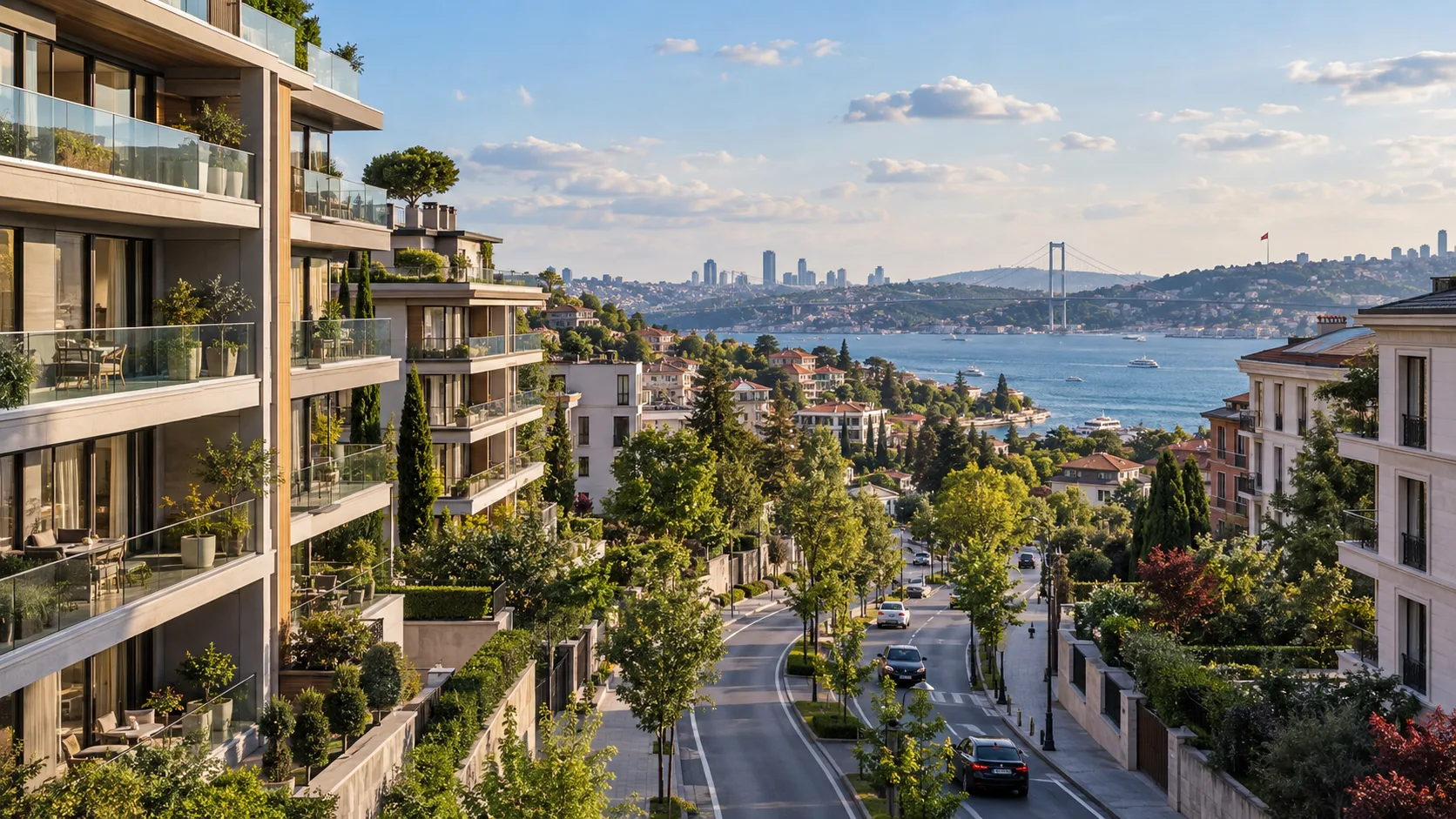
Sarıyer covers some of Istanbul's best-known premium residential and business locations, but it should not be treated as one uniform property market. The district extends across very different micro-locations, each appealing to a different buyer profile.
Maslak is strongly associated with business districts, high-rise residences and modern urban living. Tarabya presents a different proposition, influenced much more by the Bosphorus, prestige and lower-density residential environments.
5Kadıköy: Established Asian-Side Urban Living
Kadıköy's appeal comes largely from what already exists: transportation, shopping, restaurants, cultural activity, universities, employment access and mature residential neighborhoods. That makes it different from districts where the investment argument depends heavily on future transformation.
Established demand can support long-term usability, but it can also mean higher acquisition prices in sought-after micro-locations. Buyers should therefore compare the premium paid for location with the quality and condition of the actual property.
6Beşiktaş: Prime Central Istanbul
Beşiktaş is fundamentally different from many of Istanbul's newer development areas. Buyers here are often paying for centrality, lifestyle, address recognition, proximity to the Bosphorus and the relative scarcity of prime locations.
This does not mean every property in Beşiktaş is automatically a good investment. Building age, individual street, view, transport access, legal status and technical due diligence can make a substantial difference.
7Beylikdüzü: Space and Family-Oriented Living
Beylikdüzü generally appeals to a different buyer profile from central districts such as Beşiktaş and Şişli. Buyers often compare it for larger homes, newer residential compounds and a more residential lifestyle.
For a family, the trade-off can be attractive if daily life does not require constant travel to Istanbul's traditional center. For commuters, transportation and workplace location become critical parts of the decision.
8Eyüpsultan: One District, Very Different Lifestyles
Eyüpsultan demonstrates why Istanbul property should be analyzed at micro-location level. Parts of the district offer relatively central access, while northern areas attract buyers looking for space, greenery and a lower-density residential environment.
Göktürk is frequently considered by buyers looking for newer residential communities and a lifestyle outside the dense central core. Kemerburgaz can appeal to buyers who put more emphasis on greenery, space and residential privacy.
View Eyüpsultan Properties →9Şişli: Central Urban Living
Şişli remains one of Istanbul's most recognizable central districts for business, residential and commercial activity. Buyers can be close to employment areas, shopping, metro connections and established city services.
The district also contains premium micro-markets that should not be evaluated in the same way as the wider district.
Nişantaşı attracts a more premium buyer profile where address, lifestyle, retail and centrality can have a stronger influence on pricing than apartment size alone.
View Property in Şişli →10Kartal: Newer Development on the Asian Side
Kartal offers another way to approach Asian-side property. Compared with the mature urban environment of Kadıköy, parts of Kartal contain a larger concentration of newer residential development.
Its position along the Marmara coast and its transport connections can make it worth comparing for buyers who want newer apartments on the Asian side without limiting themselves to the most established districts.
What About Başakşehir and Bahçeşehir?
Başakşehir is commonly considered by buyers looking for modern residential environments, family-oriented projects and newer urban infrastructure. However, buyers should avoid treating the entire district as one market.
One important sub-market is Bahçeşehir, which has its own residential identity and should be assessed according to the specific development, commuting needs, nearby services and buyer objective.

European Side vs Asian Side: Which Is Better?
There is no universally better side of Istanbul. The European side contains many of the city's major business and development corridors, while the Asian side includes highly established residential markets as well as newer development zones.
Useful for buyers comparing central business access, premium Bosphorus districts, large new developments and a broad range of international-buyer inventory.
For most buyers, district and micro-location matter more than continent. The better question is which location gives you practical access to the lifestyle, tenant profile, employment centers and future buyer audience relevant to your purchase.
Buying for Turkish Citizenship?
Citizenship eligibility should not replace normal investment analysis. Under the current official rules, qualifying real estate of at least USD 400,000 can support an exceptional Turkish citizenship application when the applicable conditions are met, including a title deed restriction preventing resale for at least three years.
That legal threshold does not mean every qualifying property is a good investment. Buyers should still ask:
- Is the purchase price defensible?
- Is there real demand for this type of property?
- Who could realistically rent it?
- Who could buy it after the holding period?
- Would the property still make sense without the citizenship benefit?
For the current legal requirements, see the official Invest in Türkiye property and citizenship guide .
Do Not Choose a District Before Checking the Micro-Location
Two properties in the same Istanbul district can perform very differently. Before committing to a purchase, analyze the property below district level.
Walking access to the right metro, ferry, road or employment corridor can matter more than a famous district name.
Developer reputation, building condition, construction quality, facilities and management costs should be reviewed independently.
Ask who realistically wants to rent this apartment size, building type and exact location.
A strong acquisition should have a plausible resale audience rather than depending only on marketing to overseas investors.
Title deed information, restrictions, valuation, permits and transaction requirements should be checked before completion.
Explore More Istanbul Property Areas
The areas above are not the only options. Zen Real Estates also maintains dedicated location pages for other Istanbul property markets and micro-markets.
How to Choose the Right Istanbul Area
Start with investment, family living, personal use, premium lifestyle or citizenship. Do not try to optimize for everything equally.
Consider the property price together with transaction costs, furnishing needs, management fees and your expected holding period.
If you are investing, define the tenant or future buyer. If you will live there, define your real commute and lifestyle needs.
Comparing all of Istanbul at once creates noise. Narrow the city first, then compare properties.
Once the location shortlist is clear, price, quality, legal status and project details become much easier to evaluate.
Not sure which Istanbul area fits your goals?
Tell us your main property goal. Budget, area and property preferences can be added if you already know them, but you can also skip those steps and let our advisors narrow the options for you.
Find My Property →Frequently Asked Questions
What is the best area to buy property in Istanbul?
There is no single best district for every buyer. Kağıthane may suit central investment, Sarıyer and Beşiktaş premium buyers, Kadıköy and Üsküdar established Asian-side living, while Beylikdüzü may suit buyers prioritizing space and family-oriented residential projects.
Which Istanbul areas should investors compare?
Kağıthane, Basin Express and Kartal are among the areas worth comparing, but investment quality depends on the actual purchase price, project, micro-location, rental audience and resale prospects.
Which Istanbul areas are suitable for families?
Buyers looking for family-oriented environments may compare Beylikdüzü, Eyüpsultan, Bahçeşehir and selected Asian-side locations. Schools, commute, apartment size and daily services should drive the final choice.
Is the European or Asian side better for property?
Neither side is universally better. The European side includes major business, development and premium corridors, while the Asian side offers established residential markets such as Kadıköy and Üsküdar together with newer alternatives such as Kartal.
Which areas are popular for Bosphorus property?
Sarıyer, Beşiktaş and Üsküdar are key districts to compare when Bosphorus proximity, views or premium lifestyle are priorities. Micro-location and the individual property remain critical.
Can buying property in Istanbul qualify for Turkish citizenship?
A qualifying real estate investment of at least USD 400,000 may support an application under Türkiye's exceptional citizenship program, subject to the applicable legal conditions, including a three-year restriction on resale.
Final Takeaway
The best place to buy property in Istanbul is not automatically the cheapest district, the most famous address or the location with the greatest number of new developments.
It is the area where your objective, the actual property, accessibility, real demand and a realistic long-term exit strategy align.
For one buyer that may be Kağıthane. For another it may be Üsküdar, Sarıyer, Kadıköy, Beylikdüzü or a smaller Istanbul micro-market.
The first step is therefore not choosing an apartment. It is deciding what you need the property to achieve.
Market conditions and individual projects change over time. Location guidance should be combined with current project pricing, property-specific legal checks and professional due diligence before a purchase decision.


