
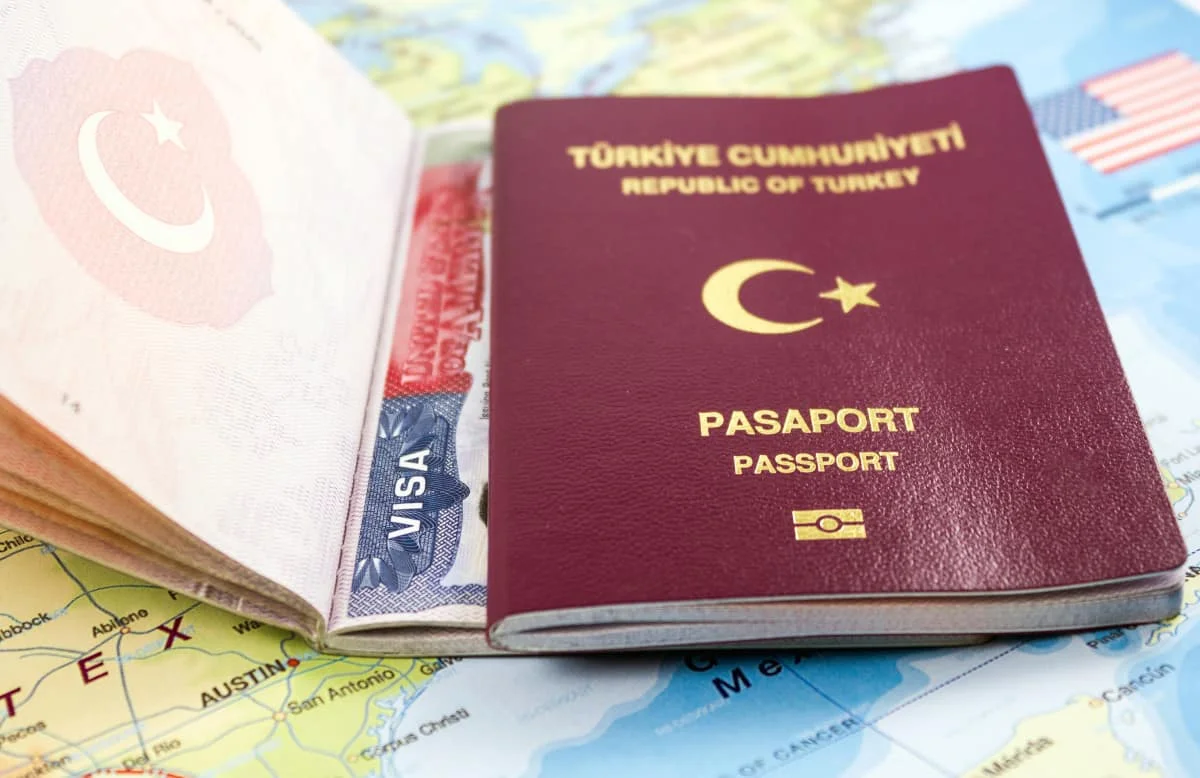
Türkiye offers an exceptional citizenship route for qualifying foreign investors who acquire eligible real estate worth at least USD 400,000 or the equivalent foreign currency and meet the applicable legal, payment and Land Registry requirements.
The program can be attractive to international buyers who already intend to invest in Turkish real estate, but it should not be treated as a simple transaction where purchasing any property above USD 400,000 automatically guarantees citizenship.
The property itself, the seller and ownership history, the officially accepted investment value, payment documentation, foreign-exchange procedure and three-year restriction must all comply with the current rules before the investment can support an exceptional citizenship application.
This 2026 guide explains the process from property selection through the Land Registry procedure, investment-value confirmation and citizenship application.
If you are still planning the purchase itself, read our guide to buying property in Istanbul and our guide to the costs of buying property in Istanbul.
What Is Turkish Citizenship by Real Estate Investment?
Turkish law provides an exceptional citizenship route for certain qualifying foreign investors.
For the real-estate route, an eligible foreign natural person may qualify to apply after acquiring real estate that satisfies the minimum investment amount and the applicable Land Registry conditions.
The current minimum threshold is USD 400,000 or the equivalent foreign currency.
The investment must also be subject to the required restriction preventing the qualifying real estate from being sold for at least three years.
Meeting the investment requirement creates a basis for an exceptional citizenship application. It does not remove the government's authority to review the applicant for matters including national security and public order, and the final citizenship decision remains with the competent Turkish authorities.
What Is the Minimum Property Investment in 2026?
The current real-estate investment threshold for this citizenship route is at least USD 400,000 or the equivalent foreign currency.
It is not enough for a marketing brochure or sales representative simply to describe a property as being worth USD 400,000.
For a citizenship transaction, the relevant official transaction amounts and payment documentation must satisfy the applicable threshold, and the investment amount must be confirmed through the current Land Registry valuation and amount-determination procedure.
This is why citizenship eligibility should be checked before paying a substantial reservation amount or completing the title deed transfer.
What Is the TTB for Turkish Citizenship?
Under the current TKGM procedure, citizenship-related real estate transactions use the Taşınmaz Edinim Sureti ile Vatandaşlık Kazanımına Esas Tutar Tespit Belgesi, commonly referred to as the TTB.
The TTB is used to confirm the investment amount that can be taken into account for acquisition of citizenship through real estate.
The amount-determination process is connected to the authorized property valuation system and is an important part of confirming whether the property satisfies the minimum citizenship investment requirement.
For this reason, buyers should not assume that an advertised sales price alone determines citizenship eligibility.
Do You Still Need a Property Valuation?
Citizenship-related property transactions remain subject to the official valuation and amount-determination framework administered through the Land Registry system.
The valuation process supports the TTB used to establish the amount that may be counted toward the citizenship investment.
The property should therefore be reviewed for citizenship suitability before completing the transaction rather than attempting to correct an insufficient valuation after purchase.
What Is the Döviz Alım Belgesi (DAB)?
Foreign natural persons purchasing real estate in Türkiye are subject to the foreign-currency procedure known as the Döviz Alım Belgesi or DAB.
For qualifying transactions, foreign currency is handled through the Turkish banking system according to the applicable Central Bank and Land Registry procedure, and the resulting DAB forms part of the transaction documentation.
For citizenship purchases, the relationship between the DAB amount, bank-transfer evidence, official sales value and the citizenship investment amount is particularly important.
Buyers should therefore arrange their payment structure before transferring funds rather than attempting to reconstruct the required documentation afterwards.
Bank Payment Evidence Matters
Citizenship transactions require properly documented payments.
Bank receipts and the official transaction documentation should clearly support the relevant payment flow between the buyer and the appropriate seller or transaction party.
Cash arrangements or undocumented payments can create serious problems when trying to establish the qualifying investment amount.
Before transferring funds, confirm:
- The correct beneficiary account.
- The currency and payment structure.
- The amount that must be documented for the citizenship transaction.
- The timing of the DAB procedure.
- The wording and supporting documentation required for the Land Registry file.
Can You Buy More Than One Property for Citizenship?
Yes. Under the current TKGM rules, there is no general limit on the number of properties that may be used when qualifying through completed property sales, provided the applicable investment requirements are satisfied.
This means an investor does not necessarily need to purchase one property worth USD 400,000 or more. Multiple eligible properties can potentially be combined where the transaction structure complies with the current rules and the qualifying amounts are properly established.
However, the rules are more specific when relying on a notarized promise-of-sale arrangement. Multiple properties may be included under the applicable structure, but the required amount and contract conditions must comply with the current TKGM rules.
The purchase structure should therefore be reviewed before contracts are signed.
Can Two Investors Buy One Property Together and Both Apply?
Shared ownership is an important area where buyers can make costly mistakes.
Under the current TKGM rules applicable to new transactions, acquisition of a fractional or shared interest in a property does not qualify for a citizenship application in the same way as acquisition of the eligible property by one foreign investor.
Investors should therefore not assume that two unrelated buyers can purchase a USD 800,000 property with USD 400,000 shares and each independently use that share for citizenship.
The ownership structure should be confirmed before the transaction is completed.
What Types of Property Can Be Used?
Not every parcel or real-estate right is suitable for the citizenship route.
The current regulations and TKGM guidance impose conditions on the legal character of the property.
For example, certain undeveloped land subject to development obligations, agricultural land and timeshare rights cannot simply be used as qualifying citizenship investments under the current rules.
Notarized promise-of-sale applications also have specific requirements concerning condominium ownership or construction servitude.
For apartments and projects under development, the title deed structure should therefore be reviewed before committing to the purchase.
The Seller and Property History Must Also Be Eligible
Citizenship eligibility is not determined only by the buyer and price.
Current TKGM rules contain restrictions relating to who owns or previously transferred the property, relationships between the parties and certain previous transactions involving foreign owners.
A property that appears financially suitable may therefore still require additional legal review before it can safely be used for a citizenship application.
This is particularly important with resale properties.
The Three-Year No-Sale Restriction
A qualifying real-estate investment must carry the required undertaking that the property will not be sold for at least three years.
The restriction is recorded as part of the relevant Land Registry procedure.
The investor remains the owner during this period, but the qualifying property cannot simply be sold as an ordinary unrestricted asset before completion of the required holding period without potential consequences for the citizenship process.
Any transaction affecting ownership during the restriction period should therefore be reviewed before action is taken.
Can You Rent the Property During the Three-Year Period?
The three-year citizenship restriction concerns disposal of the qualifying ownership rather than a general prohibition on ordinary use of the property.
Depending on the property and applicable contractual conditions, an investor may potentially use or rent the property during the holding period.
However, rental income is not guaranteed and should be evaluated separately from citizenship eligibility.
Investment decisions should be based on realistic market analysis rather than promises of fixed capital appreciation or rental returns.
Does Turkish Citizenship Include the Family?
The exceptional citizenship framework can also cover eligible family members.
Under the relevant citizenship legislation, the qualifying investor's foreign spouse and the minor or dependent foreign children of the investor or spouse may fall within the exceptional citizenship framework.
Family structure and documentation matter. Marriage, birth, custody and dependency documentation may need to be properly legalized, translated or otherwise prepared according to the specific case.
Adult children should not automatically be assumed to qualify simply because a parent is making the investment. Dependency and the applicable legal conditions need to be considered separately.
Does the Family Need to Invest an Additional USD 400,000?
Where eligible family members are included under the qualifying investor's exceptional citizenship file, the route is not structured as a separate USD 400,000 property purchase for each eligible spouse or child.
The main investor makes the qualifying investment and eligible family members are addressed within the applicable citizenship framework.
The exact family file should nevertheless be reviewed before application, especially where there are children from previous relationships, custody questions or dependent adult children.
Do You Need to Live in Türkiye Before Applying?
The exceptional citizenship-by-investment route is different from ordinary naturalization based on years of residence.
A qualifying investor does not have to satisfy the ordinary five-year continuous-residence condition simply to use the exceptional investment route.
However, the citizenship process includes its own residence-permit stage for qualifying investors under the applicable immigration category.
This should not be confused with the ordinary property-based residence permit discussed in our property residence permit guide.
Turkish Citizenship Application Process Step by Step
Step 1: Define Citizenship as an Objective Before Buying
If citizenship is one of your goals, make this clear before choosing the property.
A property that is attractive as a home or investment may not necessarily be suitable for a citizenship application.
Step 2: Check the Property, Seller and Transaction Structure
Review the title deed, legal property type, seller eligibility, ownership history and any restrictions that could affect the citizenship transaction.
This check is especially important for resale properties and unusual ownership structures.
Step 3: Complete the Required Valuation and TTB Process
The relevant valuation procedure is used to establish the citizenship investment amount through the current TTB framework.
The transaction should satisfy the minimum investment requirement before proceeding to the final citizenship-related title deed steps.
Step 4: Arrange the DAB and Bank Payments Correctly
Coordinate foreign-currency conversion and bank transfers according to the current foreign-buyer and citizenship requirements.
Keep complete banking documentation for the application file.
Step 5: Complete the Sale or Eligible Promise-of-Sale Procedure
Depending on the transaction structure, the investor completes the qualifying acquisition or eligible notarized promise-of-sale procedure in accordance with the current rules.
Step 6: Register the Three-Year Restriction
The required three-year non-sale undertaking must be reflected in the Land Registry process for the qualifying investment.
Step 7: Obtain the Investment Eligibility Documentation
After the relevant Land Registry procedure is completed, the transaction information is transmitted through the official system for issuance of the applicable investment eligibility documentation.
Step 8: Complete the Investor Residence Stage
Qualifying citizenship investors use the specific investment-related residence category provided under Turkish immigration law.
This is part of the exceptional citizenship process and differs from the standard property-owner residence route.
Step 9: Submit the Citizenship Application
After the qualifying investment and related official procedures are in place, the citizenship application is submitted through the competent population and citizenship authority with the required documentation.
Step 10: Government Review and Final Decision
The citizenship authorities review the applicant's file. National security and public-order considerations remain part of the exceptional citizenship framework.
The final decision is made by the competent Turkish authorities under the applicable citizenship legislation.
How Long Does Turkish Citizenship by Investment Take?
There is no responsible way to promise every investor that the process will be completed in a fixed number of months.
Processing time can depend on the property transaction, completion of the Land Registry and investment-confirmation stages, preparation of family documents, security checks and the citizenship authorities' workload.
For this reason, estimates should be treated as planning guidance rather than a guaranteed government processing period.
Documents Commonly Required
The exact file depends on the investor and family circumstances, but citizenship documentation can include:
- The applicable exceptional citizenship application form.
- Passport or equivalent nationality documentation.
- Birth or civil-registration records.
- Marriage documentation where applicable.
- Documents proving family relationships.
- Consent documentation concerning children where legally required.
- Proper Turkish translations, notarization or legalization where applicable.
- Investment and Land Registry documentation.
- Evidence connected to the qualifying residence status.
- Applicable government service-fee receipts.
Applicants should obtain a current checklist for their nationality and family structure because document legalization requirements can vary.
Citizenship by Investment vs. Property Residence Permit
These two routes should not be confused.
The property-ownership short-term residence permit is an immigration status based on qualifying residential property and its use as the foreigner's residence.
Citizenship by real-estate investment is an exceptional citizenship route with a separate minimum investment requirement of USD 400,000 and additional Land Registry, investment-confirmation and three-year restriction requirements.
Read our 2026 property residence permit guide if residence rather than citizenship is your primary objective.
Common Citizenship Investment Mistakes
- Buying first and checking eligibility later: citizenship suitability should be confirmed before completion.
- Assuming the advertised price is enough: the officially accepted investment amount and documentation must satisfy the rules.
- Using an incorrect payment structure: DAB and banking evidence are important parts of the transaction.
- Buying a fractional share: current rules restrict using shared ownership for new citizenship transactions.
- Ignoring the seller or ownership history: these can affect eligibility.
- Assuming every type of land qualifies: current rules exclude certain property categories.
- Planning to sell before three years: the qualifying property is subject to a three-year restriction.
- Assuming every adult child is automatically included: family eligibility depends on the applicable minor or dependency rules.
- Believing citizenship is guaranteed: the investment creates an exceptional application basis but the official review still applies.
- Believing promised returns are part of the citizenship program: property performance and citizenship eligibility are separate matters.
Frequently Asked Questions
How much property do I need to buy for Turkish citizenship in 2026?
The current minimum real-estate investment threshold is USD 400,000 or the equivalent foreign currency, subject to the applicable Land Registry and investment-confirmation requirements.
Can I buy two or more apartments to reach USD 400,000?
Potentially yes. Current TKGM rules allow multiple properties to be used in qualifying completed sales where the required combined investment amount and other conditions are satisfied.
Can two people jointly buy a property and each apply?
Current rules restrict the use of shared property acquisitions for new citizenship applications, so this structure should not be assumed to qualify.
Can my spouse apply with me?
The exceptional citizenship framework can include the qualifying investor's foreign spouse, subject to the applicable documentation and review.
Are children included?
Minor or dependent foreign children of the investor or spouse can fall within the exceptional citizenship framework subject to the relevant legal conditions.
Do I have to keep the property?
Yes. The qualifying investment is subject to a restriction preventing sale of the property for at least three years.
Can I rent my citizenship property?
The three-year restriction concerns disposal of the qualifying ownership. Ordinary use or rental may be possible depending on the specific property and contractual circumstances, but rental returns are not guaranteed.
Is citizenship guaranteed once I invest USD 400,000?
No. Satisfying the investment conditions provides a basis for an exceptional citizenship application, while the application remains subject to official review and approval.
Can Zen Real Estate guarantee how long citizenship will take?
No responsible private company can guarantee an exact government processing time. The duration depends on completion and review of the property, investment, residence and citizenship stages.
Choosing a Citizenship-Eligible Property in Istanbul
A citizenship purchase should satisfy two objectives at the same time: the transaction must comply with the citizenship requirements, and the property itself should still make sense as a real-estate investment or home.
Zen Real Estate can help you compare projects according to budget, district, delivery status and investment objective while identifying whether citizenship eligibility needs to be investigated before the purchase.
Explore our properties for sale in Istanbul or use the Zen Property Finder and select Turkish Citizenship as your main objective.
Verify the Current Rules Before You Buy
Turkish citizenship and Land Registry procedures can change, and individual transactions may involve additional restrictions that cannot be determined from the purchase price alone.
Before making a citizenship-focused purchase, the current rules should be confirmed through the General Directorate of Land Registry and Cadastre, the General Directorate of Population and Citizenship Affairs and, where appropriate, qualified independent legal professionals.


